
Catering a 250-Guest Summer Ball: What It Actually Takes
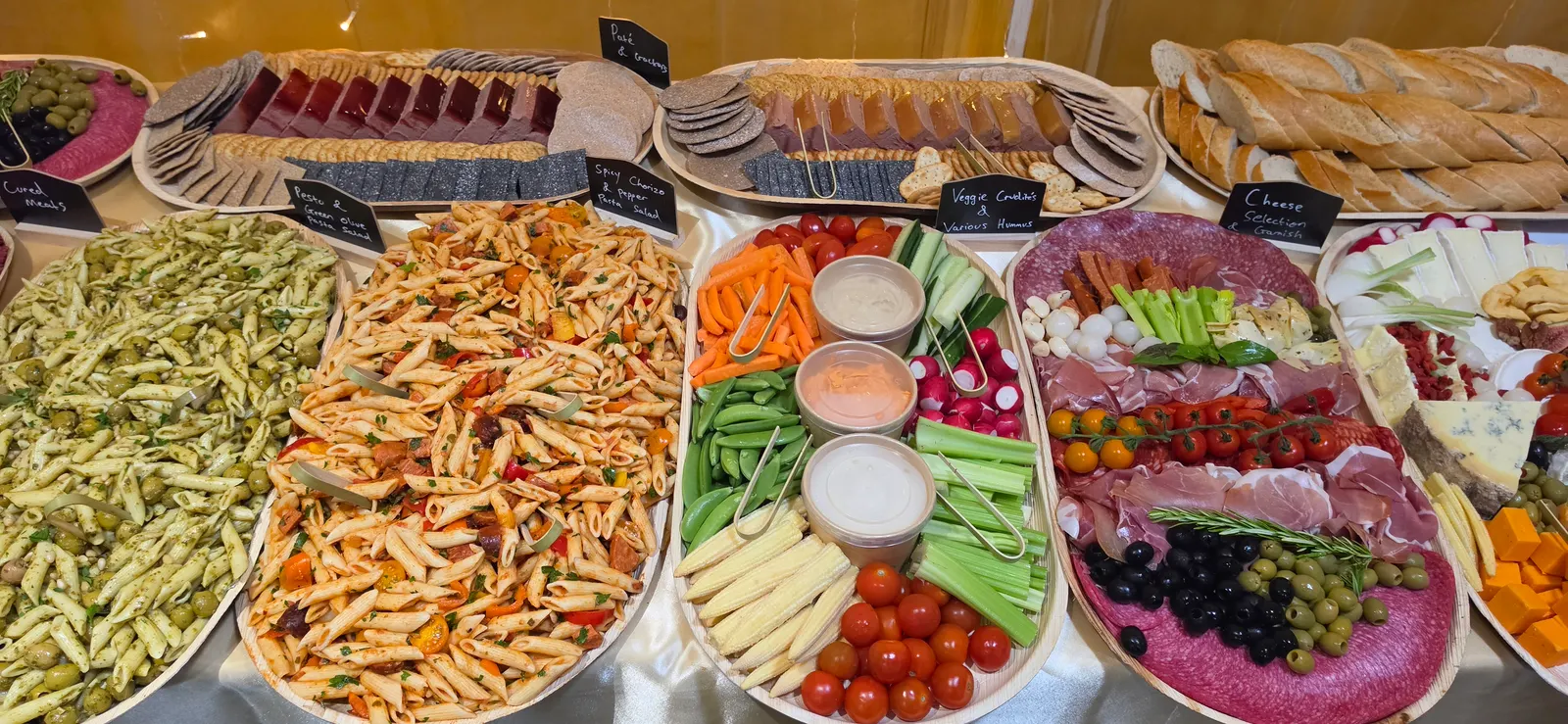
Last night we catered a Regency-themed summer ball for 250 guests at RNAS Culdrose. Cold grazing spread, laid out and ready to serve at half nine, in a room that had been a dance floor an hour earlier. Here is what a job like that actually involves — because it is rarely the food that decides whether it goes well.
Start with the serving time, not the start time
The ball began at six. The food was not needed until nine. Those are two completely different jobs, and getting them confused is how a buffet ends up tired before anyone has eaten.
A cold spread that has to look its best at 21:00 cannot simply be delivered at 18:00 and left. Salads wilt, bread dries, cured meats sweat under warm room lights. We plan backwards from the moment guests actually eat: transport chilled, set out close to service, and build the boards so the things that suffer most go down last.
If you are booking catering for an evening event, give your caterer the time you want to eat — not the time your event starts. It is the single most useful sentence in the enquiry.
250 guests is a logistics problem before it is a menu
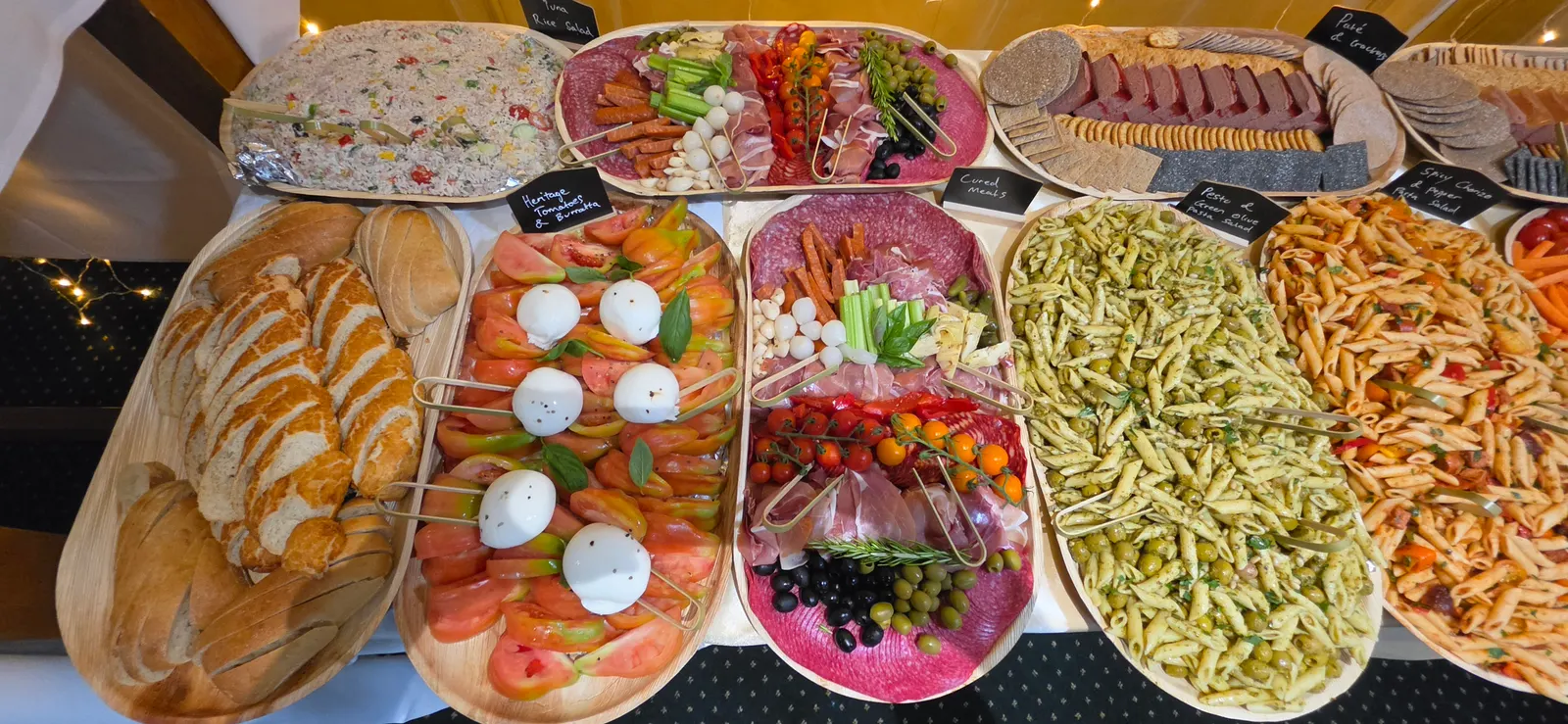
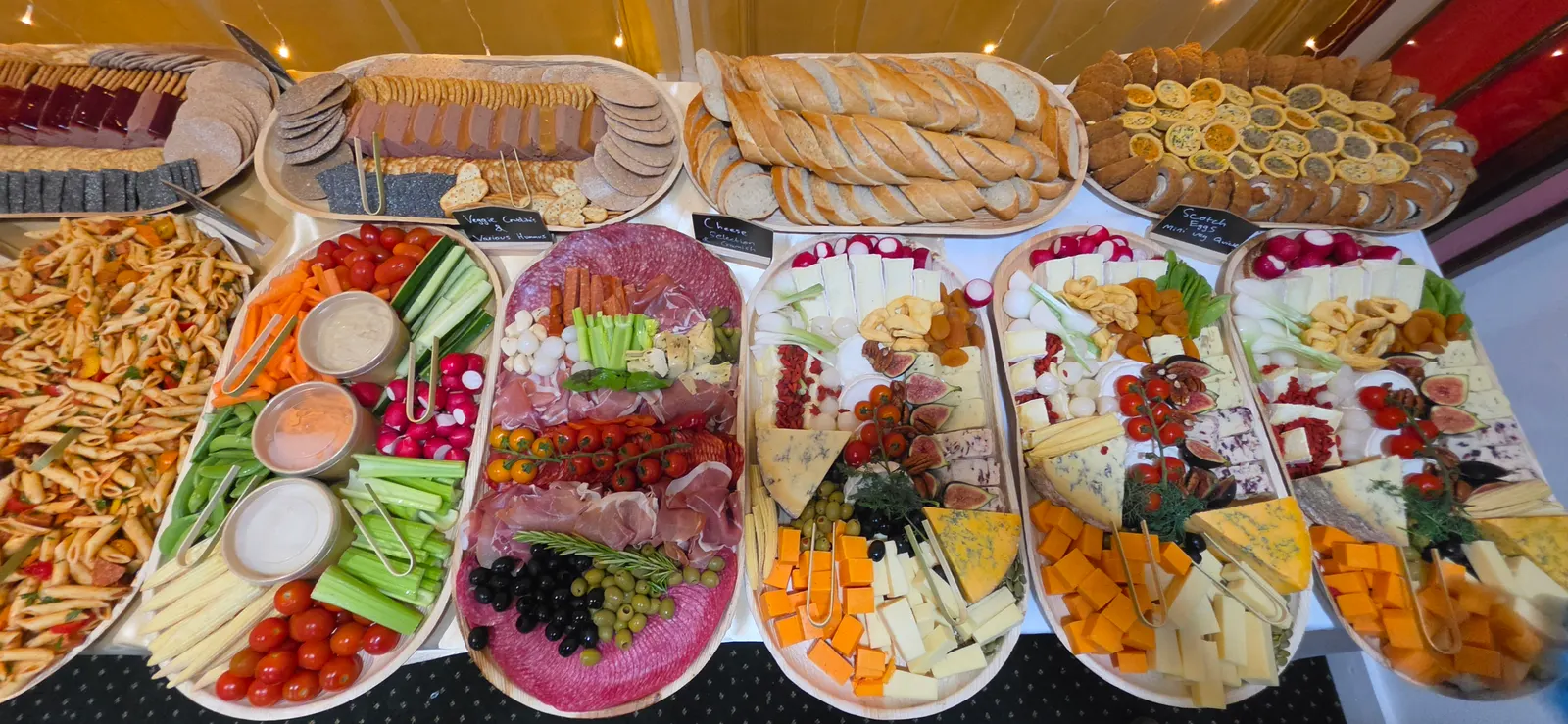
At 250 covers a grazing spread is not one long table you top up. It is a planned run of boards — new potato salad with spring onion and creme fraiche, pasta salad with sun-dried tomato and basil, tuna and rice, creamy coleslaw, continental meats and cheeses with crusty French stick, seasonal crudites with house-made dips, quiche bites, hand-rolled scotch eggs, rustic pate with crackers and chutney — arranged so 250 people can move along it without a bottleneck forming at the good bit.
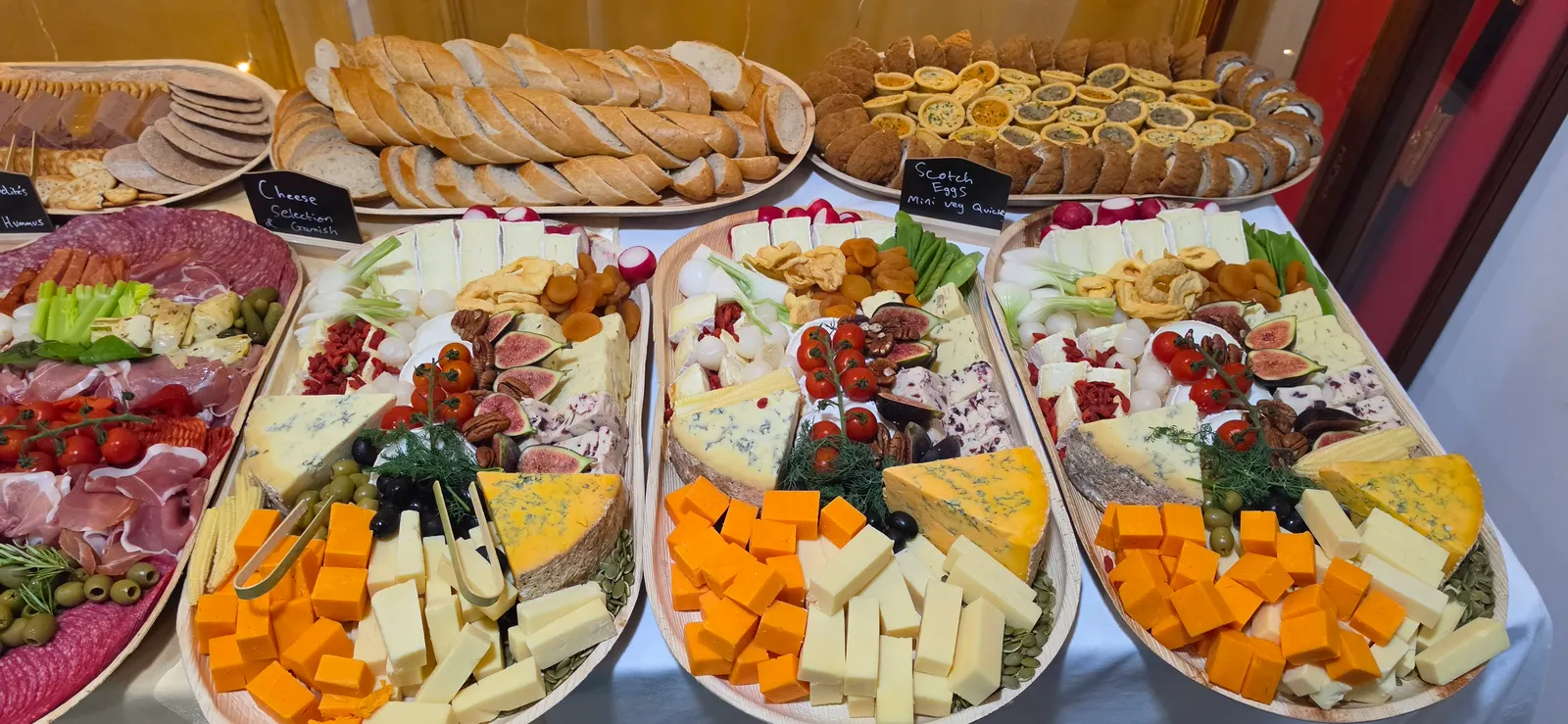
Guests serve themselves. Our team brings the food, sets it out and makes it look right; we do not plate up or provide waiting staff. For a ball with a dance floor, that is exactly what you want — people graze when they want to, not when a service round reaches them.
Dietary requirements are a design decision, not an afterthought
This event had seventeen special covers: four vegetarian, nine gluten free, three dairy free and one cow's milk intolerant. Every one of them went out on clearly labelled separate platters.
Separate platters matter more than most people realise. On a shared grazing table, one set of tongs moving between boards undoes careful preparation in seconds. Keeping the special covers physically apart is the only way to give a coeliac guest an honest answer about cross-contamination. We do not charge extra for dietary requirements — they are part of building the menu properly.
Catering on a secure site needs paperwork, early
A military establishment is not a village hall. Because the mess was not using the on-base catering contract, we had to satisfy the Defence Infrastructure Organisation directly before a single tray was loaded.
That meant: proof we are safe to trade, ten million pounds of public liability cover, our five-star food hygiene rating and the council we are registered with, Level 2 Food Safety certificates for the specific staff working the event, and a written waste management plan showing how our packaging leaves site with us and is disposed of under a licensed commercial waste contract.
Add a security process for the people and vehicles coming through the gate, submitted well in advance. None of it is difficult if you already hold the certification. All of it is fatal if you leave it to the week before. If you are organising a function on a base, ask your caterer for their compliance pack the day you book, not the month you serve.
Why cold does not mean compromise
There is a habit of treating a cold buffet as the budget option. It is not — it is the right format for a long evening event where guests are drinking, dancing and eating in waves rather than sitting down together.
Hot food has a window. Miss it and you are serving something that has been held too long. A properly built grazing spread has no such window: it looks generous at nine and still looks generous at eleven, which is when a fair proportion of a ball actually goes looking for food.
Planning a ball, mess function or large evening event?
We cover Cornwall and Devon from our kitchen in Redruth, with delivered buffets and grazing spreads for large evening events, and cook-team formats where a venue suits live cooking. Tell us your guest numbers, the time you want to eat and any dietary requirements, and we will come back with a fixed quote inside 48 hours.
Planning an event?
Get a free, no-obligation catering quote from Salt Wind Catering. Buffets, BBQs, hog roasts and more across Cornwall and Devon.
Written by the Salt Wind Catering kitchen team from our base in Redruth, Cornwall. Our guides, pricing notes and recipes come from events we have actually catered across Cornwall and Devon — corporate lunches, welfare meals on site, hog roasts, film-unit catering — and every piece is checked against how we really work before it is published.
The numbers, timings and menus in our articles come from events we have actually catered. About us.
More from the kitchen
How We Catered Two Rosamunde Pilcher Films Across Cornwall
A behind-the-scenes case study: how Salt Wind Catering catered two back-to-back Rosamunde Pilcher feature film...
Off-Grid Film Catering: Feeding Crews on Remote Cornwall & Devon Locations | Salt Wind Catering
Our self-contained mobile kitchen carries its own LPG appliances, generators, water, refrigeration and waste —...
How Far Ahead Should You Book a Film & TV Caterer in Cornwall? | Salt Wind Catering
Book your location caterer as soon as shoot dates and unit base are confirmed — 3–6 weeks for a standard shoot...