
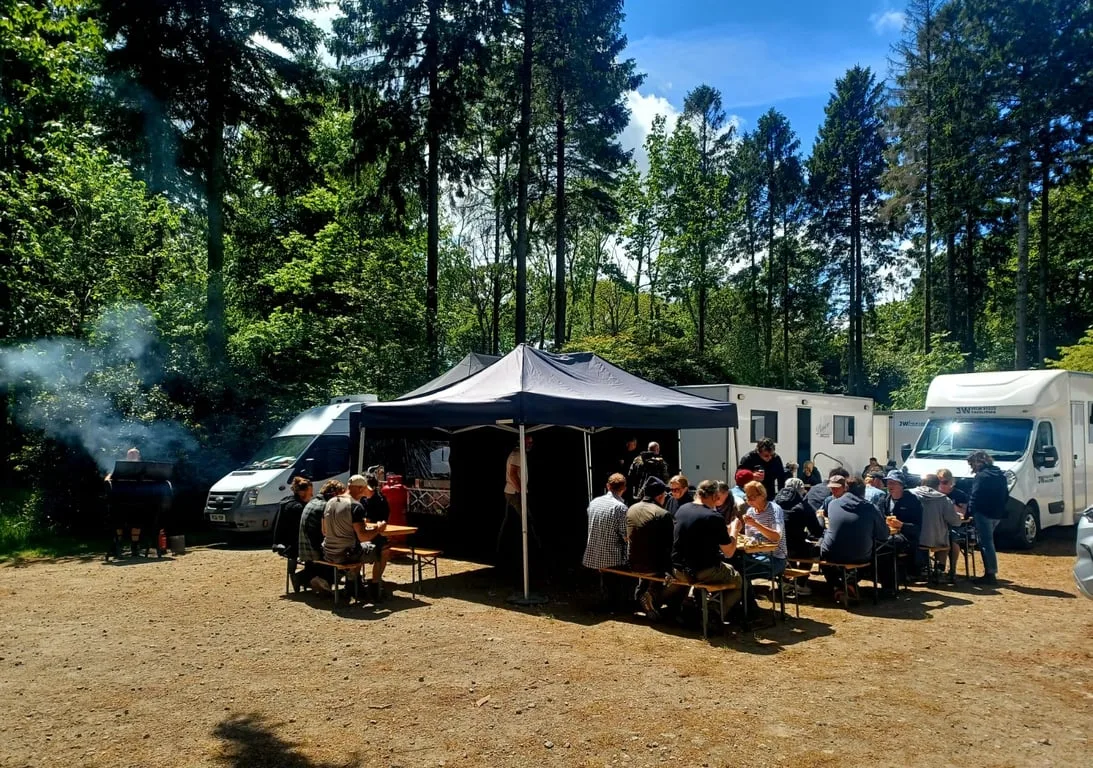
How We Catered Two Rosamunde Pilcher Films Across Cornwall
Over the spring and summer of 2026, Salt Wind Catering catered two back-to-back Rosamunde Pilcher feature films for German broadcaster ZDF, produced by FFP New Media. Forty-two shoot days. Up to 60 cast and crew a day. Fourteen locations, from Penzance in the far west to Portloe on the Roseland, every one of them cooked or hot-boxed from our own self-contained mobile kitchen, and not a mains socket among them. This is how you feed a feature film that never stops moving.
2 films · 42 shoot days, every one catered · up to 60 cast and crew a day · around 2,500 covers · 14 Cornwall locations · zero venue kitchens.
Two Rosamunde Pilcher films, back to back
The Rosamunde Pilcher films have been shot in Cornwall for German television since 1993: more than a hundred feature-length films over the years, and one of the most-loved German TV brands anywhere, made almost entirely on our doorstep. When FFP New Media planned the 2026 season, they wanted to keep the catering local. We got the call.
First came Merren Cove, filming from late April through May. Heart Waves: Herzwellen in German, followed across June and July. Each ran to 21 shoot days on a mostly five-day week, and we were on set for every single one of them. Between the two, that's 42 days of hot breakfasts, full lunches and all-day craft services, cooked wherever the story needed to be that morning.
A Pilcher film is a period-flavoured romance shot almost entirely on location, grand houses, gardens, harbours and cliffs, rarely the same one twice. For a caterer that means one thing above all else: you move. The daily headcount climbed to around 60 once cast, art department, security and supporting artists were all in, and the unit rarely sat still for more than a couple of days. The production liked the first film enough to bring us straight back for the second, which, in this business, is the only endorsement that really counts.
Where was Rosamunde Pilcher filmed in Cornwall in 2026?
Between the two films, the unit moved across 14 locations spread the length of the county, coast, subtropical gardens, working harbours and old mining cliffs, from far-west Penwith to the Roseland. Here's the tour, west to east.
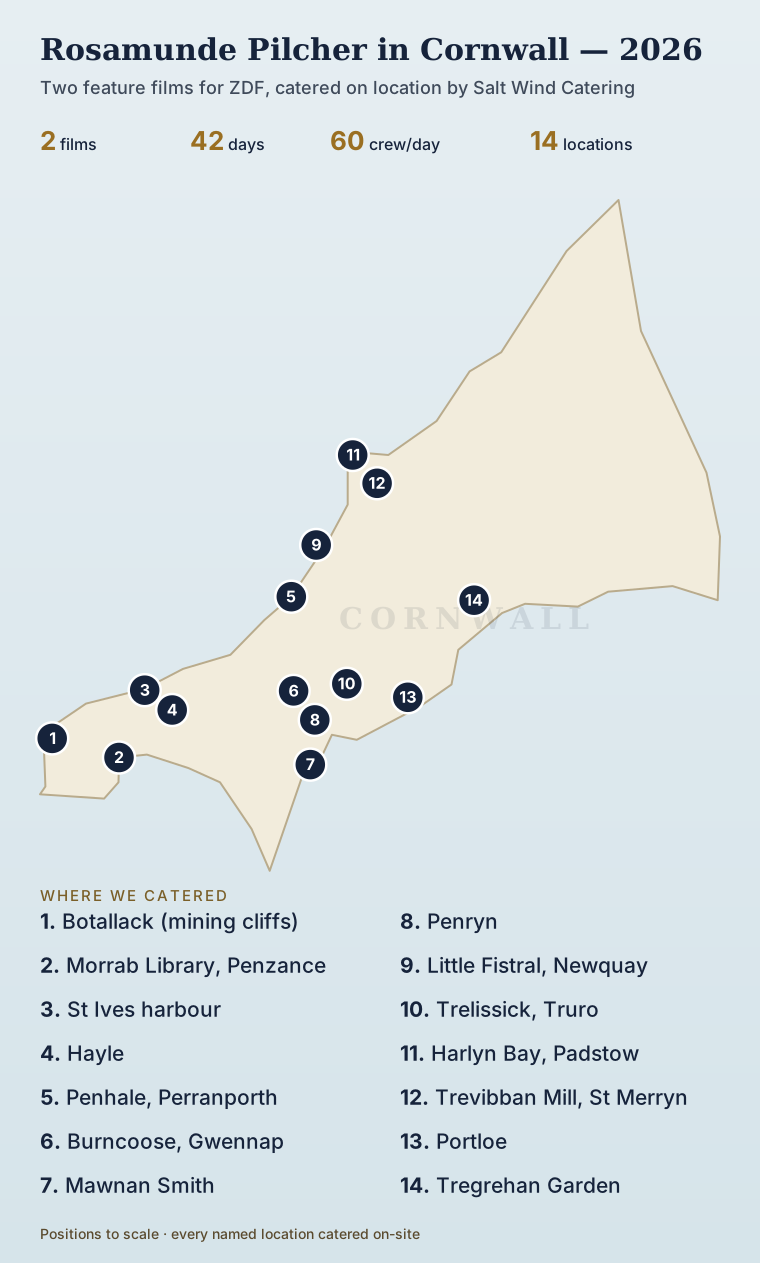
Botallack, near St Just: the tin-mining cliffs, the Poldark coastline.
Morrab Library, Penzance: a subscription library in the far west.
St Ives: the whitewashed harbour; we hot-boxed lunch down to the seafront.
Hayle: the long tidal beach on St Ives Bay.
Little Fistral, Newquay: the north-coast surf beach.
Penhale, near Perranporth: the dune system on the north coast.
Harlyn Bay, near Padstow: a sheltered north-coast bay.
Trevibban Mill, St Merryn: a vineyard near Padstow.
Tregrehan Garden, near St Austell: a historic garden of great trees.
Trelissick, near Truro: National Trust gardens on the Fal.
Portloe: a tiny fishing village on the Roseland.
Burncoose, Gwennap: gardens near Redruth.
Mawnan Smith, near Falmouth: a south-coast village near the Helford.
Penryn: the old stannary town beside Falmouth.
If you're a Pilcher fan trying to place a backdrop, that spread is about as wide as Cornwall gets in a single season. We've written up how we handle the county's best-known Cornwall filming locations and their access quirks separately.
A new location almost every day
The hardest part of catering a feature film isn't the cooking. It's that the ground keeps moving, and there's no fixed kitchen to go back to. On a Pilcher shoot the location can change almost daily. Each afternoon a movement order lands: here's tomorrow's unit base, here's how you get in, here's the gate time, here's when the crew eats.
So the job is really 42 small plans. We'd run a full lunch service beside a garden estate one day and be set up on an exposed clifftop the next, reading the weather as closely as the call sheet. It rewrote the schedule more than once, cliff days swapped for interiors at a few hours' notice, and we moved with it every time.
St Ives was the clearest example. You can't put a mobile kitchen on a working harbour in high summer, so we based the unit nearby, cooked there, and ran hot boxes down to the seafront so the crew ate hot between set-ups. That gap, between a caterer who can cook and one who can actually service a moving film unit, is the whole game. It's what a complete unit base is built around.
Cooking off-grid, every single day
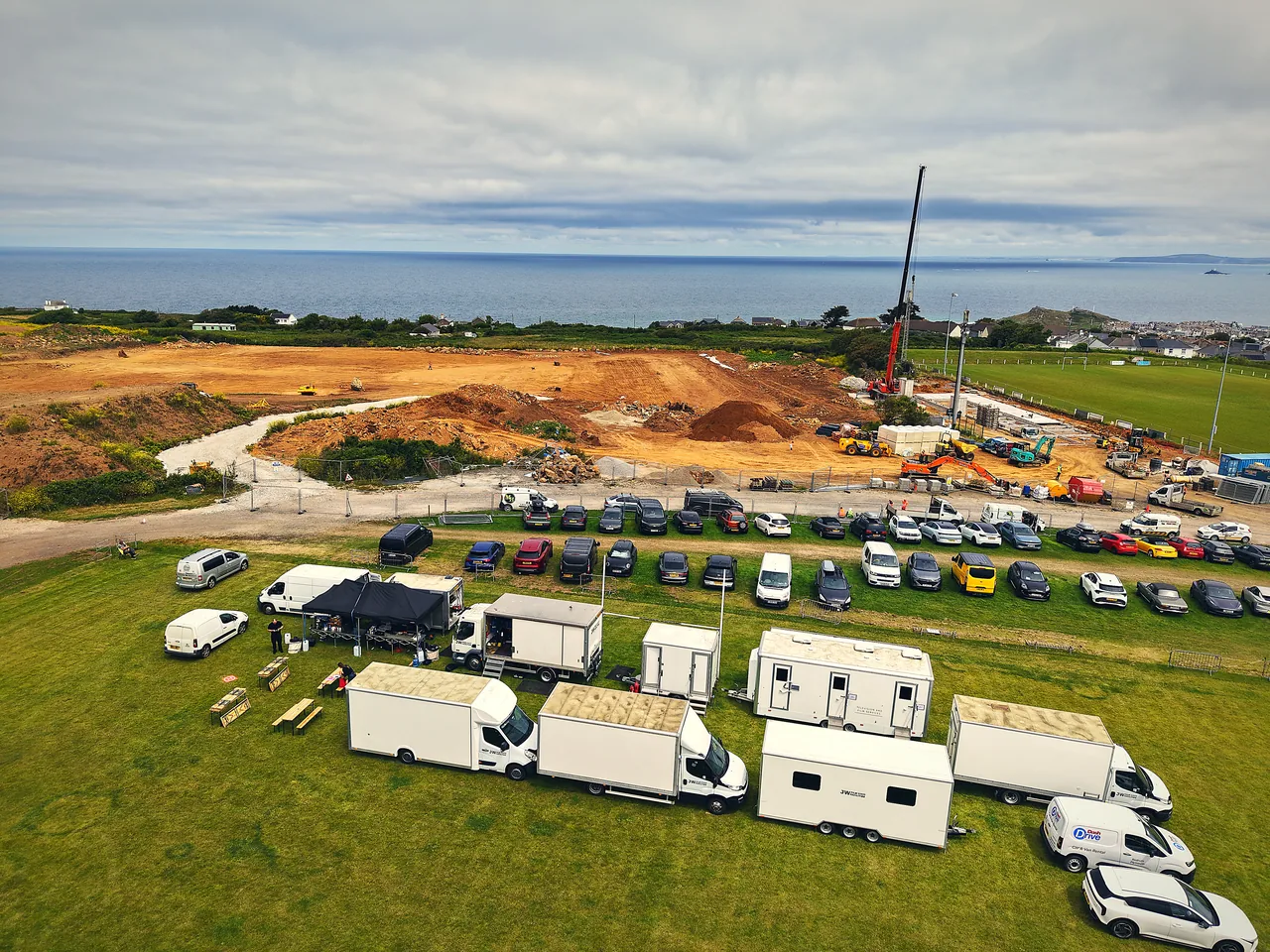
Not one of those 14 locations came with a kitchen we could borrow or a mains socket we could count on. That's normal for Cornwall's best filming spots, clifftops, beaches, National Trust gardens and private estates almost never have catering facilities, and a caterer who needs a plug isn't much use to a location manager.
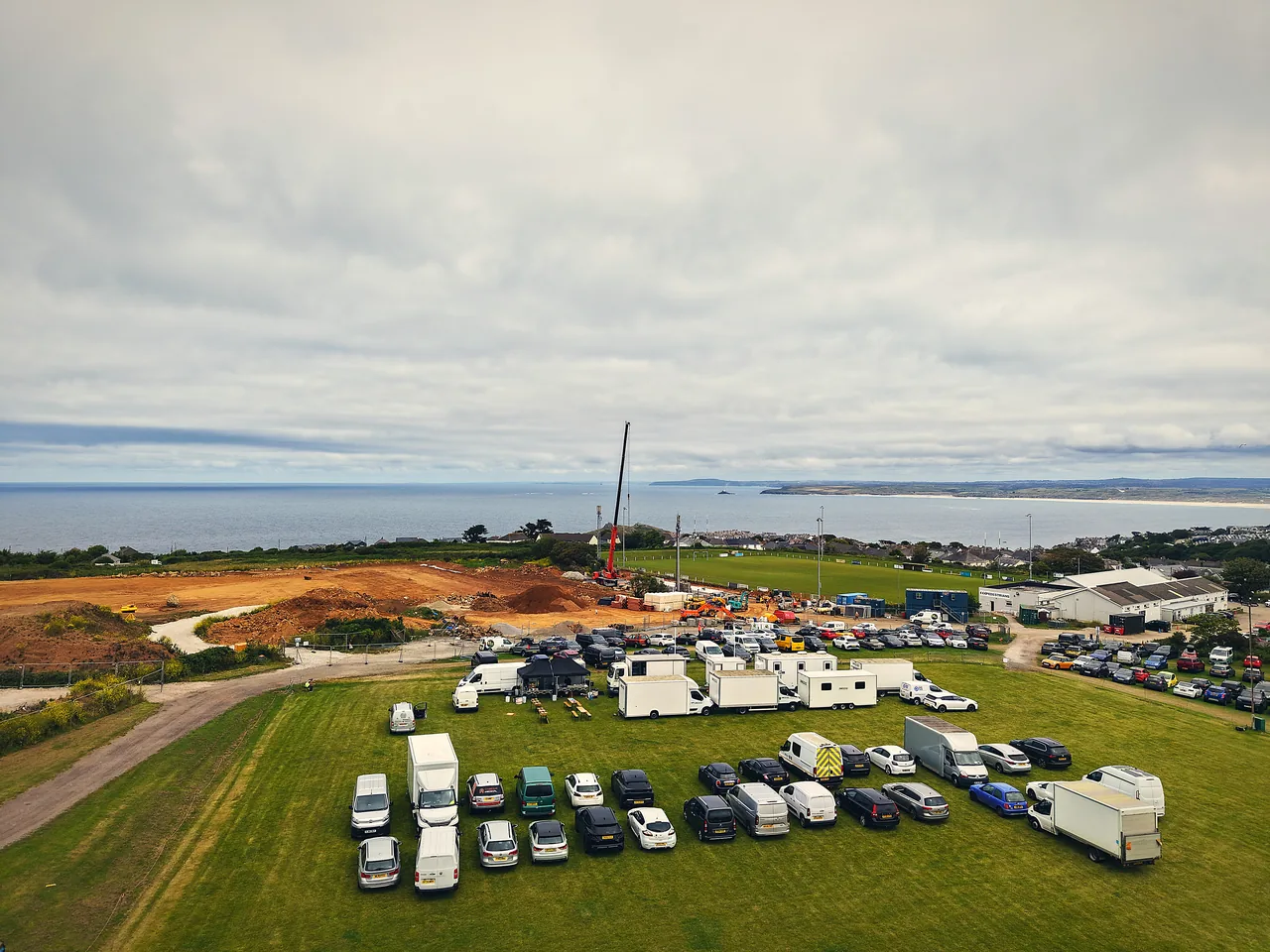
So we bring the lot: LPG, charcoal, power, water and waste, all self-contained. Some mornings that meant firing up before first light, so the crew had hot food and strong coffee in the dark before the first set-up. Others it was a full hot lunch running off our own power beside a stately home. Set up at the unit base where we can pitch, with cast and crew eating directly from us, hot boxes out to set where we can't, either way the food lands hot and on time, every service. It's the same off-grid film catering we run for remote shoots the length of Cornwall and Devon.
Feeding an international cast and crew
An international production eats to a wider spec than most events, and on a film set getting it wrong isn't just awkward, a caterer who slows the day down burns real money off the schedule. Across both films we ran the dietary list by name for the whole season: vegan, vegetarian, gluten-free, lactose-free, no-pork and a handful of specific allergies, each one labelled clearly at the counter so nobody had to ask twice.
The rhythm was the same every day and different every day. Hot breakfast at call time, bacon and Cornish-sausage baps, free-range scrambled eggs, filter coffee (never push-button). A proper multi-course lunch that had to land inside the window the schedule allowed, not a minute late: one day lemon and thyme roast chicken supreme in a white-wine cream sauce with rosemary-roasted Cornish new potatoes, a sweet-potato, spinach and chickpea curry for the vegan and gluten-free crew, and a real salad bar rather than a token bowl of leaves. All-day craft services in between, hot drinks, fresh fruit and snacks kept topped up while the cameras rolled, and a Cornish cream tea at the afternoon break that took an international crew a moment to work out (jam first, then cream). Feed a German-speaking crew day after day and you learn their preferences fast, then cook to them. If you're curious what actually goes out across a shoot day, we've written about what a German TV crew eats on a Cornish shoot.
What it takes to cater a Cornwall film shoot
If you're bringing a production to Cornwall, the catering brief is simpler than it looks: get your caterer in early, share the schedule as it firms up, and expect to work off-grid. Give us the call sheet, the crew numbers, the locations and the dietary spread, and we build the rest around your day, because we've now done exactly that, back to back, across a whole feature-film season.
Salt Wind Catering is based in Redruth, central for the whole county and the wider South West, and we're fully self-contained, so no venue kitchen or power is ever required. Got shoot dates? Request a production quote and we'll come back the same day during office hours, from our published from-£30 +VAT per-head crew day rate.
Frequently asked questions
Who caters film shoots in Cornwall?
Salt Wind Catering provides on-location crew catering across Cornwall, Devon and the South West. In 2026 we catered two Rosamunde Pilcher feature films for ZDF, feeding up to 60 cast and crew a day across 14 locations.
Where was Rosamunde Pilcher filmed in Cornwall in 2026?
Across 14 locations, including Morrab Library in Penzance, Botallack, St Ives, Hayle, Newquay, Padstow's Harlyn Bay, Perranporth, Tregrehan Garden, Trelissick, Portloe and Burncoose, a spread from far-west Penwith to the Roseland.
How do you cater a production that changes location every day?
We work off the daily movement order, run a self-contained mobile kitchen at the unit base, and hot-box hot meals out to set wherever vehicles can't reach, as we did down to the St Ives seafront.
Catering a shoot?
Self-contained mobile kitchens, breakfast call through to wrap, anywhere within 300 miles of Cornwall, including locations with no power, water or kitchen. The production pack sets out menus, dietary handling and unit-base requirements in one place.
Written by the Salt Wind Catering kitchen team from our base in Redruth, Cornwall. Our guides, pricing notes and recipes come from events we have actually catered across Cornwall and Devon, corporate lunches, welfare meals on site, hog roasts, film-unit catering, and every piece is checked against how we really work before it is published.
The numbers, timings and menus in our articles come from events we have actually catered. About us.
More from the kitchen
Off-Grid Film Catering: Feeding Crews on Remote Cornwall & Plymouth Locations
Our self-contained mobile kitchen carries its own LPG appliances, power, water, refrigeration and waste, feedi...
How Far Ahead Should You Book a Film & TV Caterer in Cornwall?
Book your location caterer as soon as shoot dates and unit base are confirmed, 3–6 weeks for a standard shoot,...
How Corporate Events Hit Sustainability KPIs Without the Greenwash
The five questions every procurement officer should ask a caterer, and what genuine answers look like. Evidenc...